The Jade of Ceramics——A Definitive Guide to the Legacy of Yue Kiln
In the realm of global ceramic history, few names command as much reverence as Yue Kiln (越窑). As the progenitor of celadon, Yue Kiln is not merely a manufacturing site but a spiritual landmark that has shaped the trajectory of Oriental aesthetic home culture for over a millennium. For enthusiasts of UK home interior design who seek objects with both soul and history, understanding the legacy of Yue Kiln is essential to mastering the art of the Zen home interior.
LANN Home
4/14/20262 min read
A Brief History
The story of Yue Kiln begins in the Han Dynasty, thriving in the verdant landscapes of Zhejiang province. However, it reached its zenith during the Tang and Song Dynasties. It was during this "Golden Age" that Yue ceramics became the "tribute porcelain" for the imperial court.
Early poets described Yue celadon as "misty peaks across a lake" or "the green of a thousand mountain tops." This pursuit of a specific shade of green was not accidental; it was a deliberate attempt to replicate the tactile and visual qualities of jade—the most sacred stone in Eastern philosophy. For the contemporary collector, a Yue-inspired piece serves as a timeless bridge between ancient imperial luxury and modern Zen home interior minimalism.
Defining Characteristics: The "Secret Color"
What distinguishes Yue ceramics from the rest of the world’s pottery? Its identity is defined by three core pillars:
1. The Glaze of a Thousand Peaks
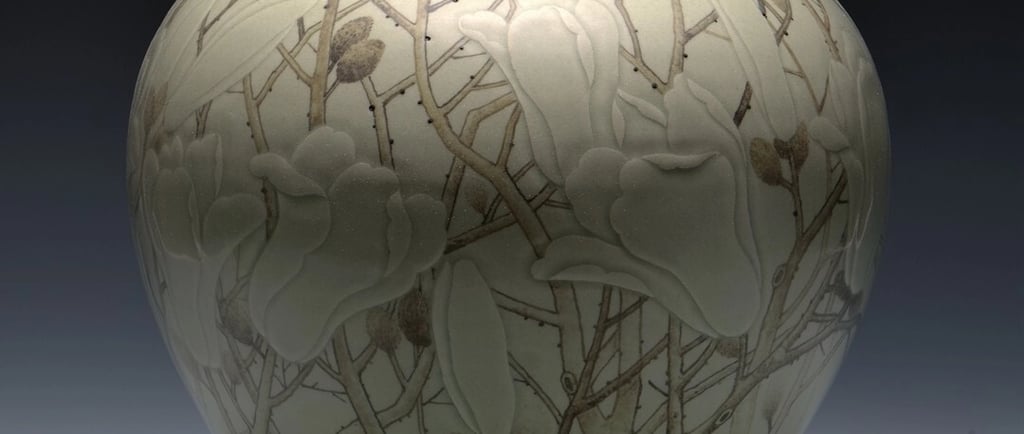
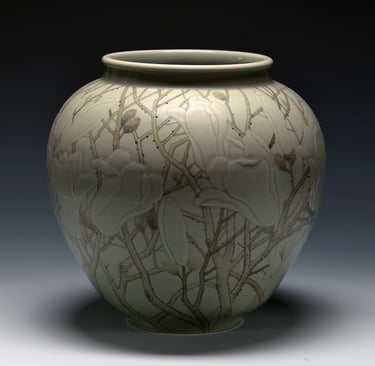
The hallmark of Yue Kiln is its Plum Green (梅子青) and Powder Green (粉青) glazes. Unlike the glossy, glass-like finish of modern mass-produced ceramics, Yue glazes possess a "greasy" luster—a soft, translucent depth that feels warm to the touch. In the context of UK home interior design, these muted, nature-driven tones offer a sophisticated alternative to the sterile whites of industrial minimalism.
2. Fluidity of Form
Yue Kiln vessels are celebrated for their organic, fluid silhouettes. From the iconic "Guanyin Ewer" to the "Lotus Petal Bowl," the forms are inspired by nature. This emphasis on organic shapes is a key reason why Yue-style ceramics are so frequently featured in Japandi and Zen home interior settings, where the goal is to blur the line between the outdoors and the indoors.
3. The Mystery of "Pi Se" (Secret Color)
Perhaps the most legendary chapter of Yue history is the "Pi Se Yao" (Secret Color Kiln). For centuries, this specific, superior grade of celadon was reserved exclusively for royalty, its formula a state secret. When you place a Yue-style vase in your home, you are not just placing a flower vessel; you are anchoring your space with a legacy of exclusivity and high art.
Yue Kiln in Modern UK Home Interior Design
In recent years, we have seen a significant shift in UK home interior design trends. Homeowners are moving away from "fast furniture" and toward objects with "provenance"—a story of origin. This is where the Yue aesthetic truly shines.
The cool, serene tones of celadon are remarkably versatile. In a traditional British townhouse, a Yue-inspired celadon jar provides a refreshing pop of color against dark oak or mahogany. In a contemporary London loft, the "Bi-Se" green acts as a neutralizing element, bringing the calming energy of the Zen home interior to a high-pressure urban environment.
Integrating Zen and Heritage
The philosophy of Eastern aesthetic home design is rooted in the concept of "emptiness" (Ma). A room should not be filled; it should be curated. A single Yue Kiln irregular vase, holding a solitary plum blossom or a dried willow branch, creates a focal point for meditation.
The aesthetic of Yue Kiln is inherently "Wabi-sabi"—it respects the subtle variations in the glaze and the slight irregularities of the hand-thrown form. This "perfect imperfection" is what makes it resonate so deeply with the current British desire for authenticity and craftsmanship in home interior design.
LANN Home
Join our journey to discover the art of living.
Contact
Newsletter
© 2026 LANN Home. All rights reserved.
No.65 Huandongyi Road, Jinshan District, Shanghai
Address